










Functional Capacity Assessments

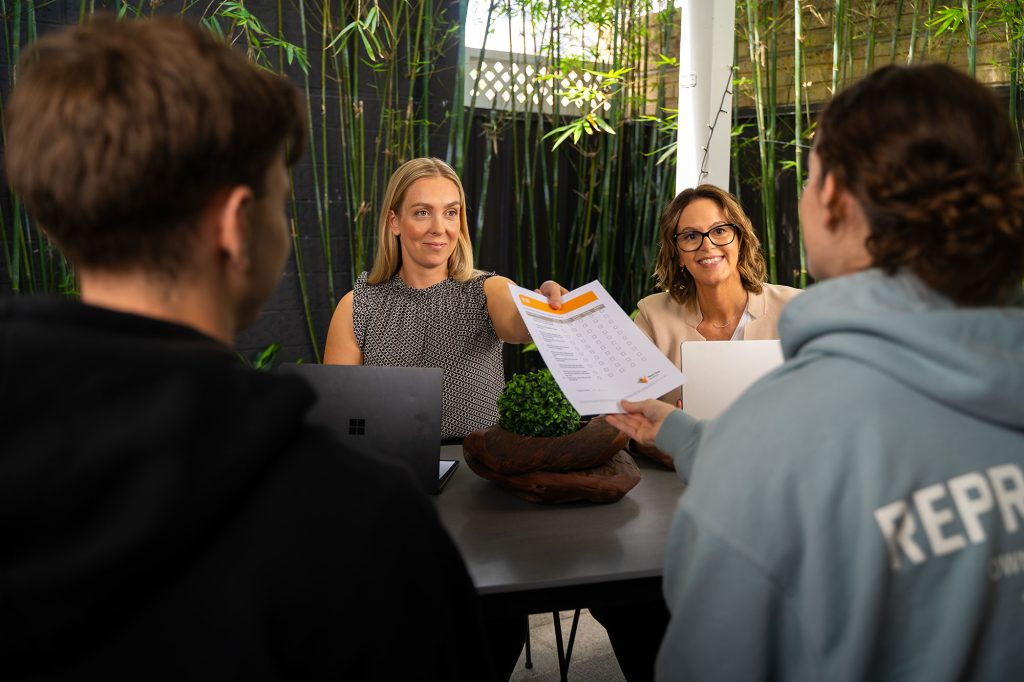
Medico-Legal Services: Professional women provide legal documents at a conference table with laptops. Bamboo backdrop adds a natural touch.

Independent, evidence-based functional capacity assessments across Australia, with two occupational therapists at every assessment at no additional cost.

A functional capacity assessment measures how an injury, illness or disability affects a person’s ability to carry out everyday activities. Our reports are used by the NDIA, by plaintiff and defendant law firms, by insurers and compensation schemes, and by employers planning a return to work.

  • AHPRA registered
  • Two OTs at every assessment
  • Australia-wide
  • Court-experienced

Phone: 0427 435 591

40+ Years Experience
5,000+ Reports Delivered
10 Expert OTs
Australia-Wide Service

The definition

What is a Functional Capacity Assessment?

A functional capacity assessment (FCA) is a structured evaluation of how a person's injury, illness or disability affects their ability to carry out everyday activities. Also called a functional capacity evaluation or FCE, it measures functional impact rather than diagnosis, across areas including self-care, mobility, communication, cognition and work.

Two people with the same diagnosis can live very different lives. One manages independently; the other cannot shower without help, cannot drive, and cannot return to the job they held for twenty years. A diagnosis does not capture that difference. A functional capacity assessment does, and that is why funding bodies, insurers and courts rely on one before making decisions that affect a person's income, housing and support for years to come.

Independent OT has been assessing functional capacity since 1984. Our reports are used by the NDIA, by plaintiff and defendant law firms, by insurers and compensation schemes, and by employers planning a return to work.

Who we work with

Who Commissions a Functional Capacity Assessment

An FCA answers the same clinical question for very different audiences. What changes is the framing of the report, not the rigour of the assessment.

NDIS participants, support coordinators and plan managers

Functional evidence for access requests, plan reassessments, increased support hours, and home and living pathways including SIL and SDA. Funding decisions turn on functional impact, not diagnosis alone, so the quality of the evidence matters.

NDIS assessments

Lawyers and solicitors

Plaintiff and defence firms instruct us in personal injury, compensation and negligence matters. Our reports are written on the understanding they may be tested under cross-examination.

Medico-legal assessments

Insurers and compensation schemes

CTP insurers, workers compensation schemes, life insurers and self-insured employers use functional capacity evidence to assess entitlement, quantify care and plan rehabilitation.

TPD assessments

Employers and return-to-work coordinators

Objective evidence of what an employee can and cannot safely do is gathered through thorough assessment, so that duties, hours and adjustments are built on assessment results rather than assumption.

Return to work

The seven domains

What a Functional Capacity Assessment Measures

We assess across seven areas of everyday function. For NDIS participants, these map to the six functional domains the NDIA uses in its decision-making, and the report is structured so a planner can find each domain quickly.

Self-care and activities of daily living

Personal hygiene, showering, dressing, grooming, toileting, meal preparation and eating. Our activities of daily living assessments record not only whether a task can be completed, but at what cost: how long it takes, how much fatigue or pain it produces, whether it can be repeated the next day, and what assistance or equipment makes it possible.

Mobility

Walking, navigating stairs, managing transfers between sitting and standing, getting in and out of a car, and navigating the home and community. We record the use of aids, the distances tolerated, and the difference between a person's capacity on a good day and on a bad day.

Communication

Expressing needs, understanding others, and participating in conversation, whether by speech, writing (including email and text) or alternative methods (non-verbal communication). This includes a person's ability to regulate emotions when communicating with others, which is an area of difficulty for many of the individuals we assess.

Social participation

Maintaining relationships, engaging with family and friends, and taking part in community, recreational or volunteer activity. Withdrawal from these is often the earliest and most under-documented consequence of injury.

Learning and cognition

Memory, attention, information processing and executive function. We assess how these present in real tasks, such as following a recipe or managing a medication schedule, as well as in terms of learning a new subject matter or skill.

Self-management

The practical outcome of cognition, communication and social capacity combined: managing money and bills, arranging services, keeping appointments, and solving the ordinary problems of a week. This is where many people with cognitive or psychological injury struggle most, and where reports most often fall short.

Work and leisure

Capacity for paid work, study and vocational activity, and for the hobbies, sport and travel that make up a life outside work. Where relevant, we address both own-occupation and any-occupation capacity.

For NDIS matters: the NDIA considers six functional domains — mobility, communication, social interaction, learning, self-care and self-management. Our reports address all six, and additionally cover work and leisure, which matters for participants with employment or study goals and for non-NDIS matters.

Standardised measurement

The Tests and Measures We Use

Standardised measures matter because they make findings comparable, defensible and difficult to dismiss. A planner, an insurer or a court can see how a conclusion was reached rather than being asked to take it on trust.

We triangulate. No single functional capacity test captures a person's whole situation, so we typically combine multiple validated measures with clinical interview and direct observation of real tasks in the person's own environment. Where a person's presentation varies day to day, we say so, and we explain how that variability affects the findings.

Standardised testing also has limits, and a report that pretends otherwise is easy to discredit. A person can complete a lifting task once in a clinic and be unable to repeat it the following morning. We record what the measures show, and we record what we observed alongside them, as well as information gathered from the individual or their support person to triangulate the evidence.

The type of assessment varies depending on the individual being assessed. Two people may both experience cognitive impairments, though the level of impairment would dictate which assessment or combination of assessments we might decide to use. The table below summarises a few cognition assessments that may be used to measure a person's level of cognitive impairment.

ToolWhat it measuresWhen we use it
MoCA
Montreal Cognitive Assessment
Cognition across executive functioning, spatial awareness, memory, abstract thinking, language and orientation. For individuals with a fairly evident cognitive impairment.
Assessment Forms for Cognitive Rehabilitation The more subtle issues associated with cognitive impairments, across executive functioning, memory, attention, visual and information processing. For individuals whose cognitive impairment is more subtle, where tools such as the MoCA may not reflect the level of impairment.
Community Integration Questionnaire An individual's ability to engage in community-based tasks of daily living, as well as economic and social activities. Where a person functions relatively well at home but has difficulty in the community, due to divided attention, interaction with others, or risk of exploitation.

Tool selection is a clinical decision made at assessment. The measures listed are indicative, not a guarantee of what will be used during each assessment.

Our difference

Two Occupational Therapists at Every Functional Capacity Assessment

Every functional capacity assessment we conduct is attended by two occupational therapists, at no additional cost. No other provider in the Australian market offers this as standard.

Two experts, one fee

One OT leads the assessment while the second observes and records. Two clinicians see more than one, and the second set of eyes catches what a single assessor, occupied with running the session, may inevitably miss.

Trauma-informed and compassionate

Because the second therapist is dedicated to recording results, the primary therapist can be completely present with the person being assessed rather than taking notes at the same time. Rapport builds quickly, and the person feels genuinely listened to. For someone describing the worst thing that has happened to them, that difference is not a small one.

Objective and peer-reviewed

Two independent sets of observations are reconciled before the report is written. Findings that only one assessor noted are examined further rather than assumed. The result is a report that holds up under scrutiny, whether that scrutiny comes from a planner, an insurer or a barrister.

The process

What Happens During a Functional Capacity Assessment

Most assessments take two to three hours, conducted in the person's own home wherever possible.

1

Before the assessment

We review the available medical records, hospital discharge summaries and specialist reports, and build a timeline from the onset of injury or illness to the present.

Arriving informed means the assessment time is spent on function rather than on gathering a history the records already contain.

2

During the assessment

Most assessments take two to three hours. They include a structured interview, standardised measures, and direct observation of everyday tasks. We assess in the person's own home wherever possible, because a kitchen someone has used for thirty years tells you things a clinic room cannot.

Support people are welcome to attend. Where fatigue is a significant factor, the assessment can be split across two shorter sessions.

3

After the assessment

The two attending therapists reconcile their observations, analyse the standardised results, and prepare the report. We may contact the person, their family or their treating clinicians to clarify details where this is deemed necessary.

Report timeframes are set out below.

The deliverable

What a Functional Capacity Report Contains

A functional capacity report is only as useful as it is usable. Ours are structured so the reader can find the answer to their specific question without reading all ninety pages.

  • Functional summary by domain, with observed capacity stated separately from reported capacity
  • Results of each standardised measure, with the reasoning for its selection
  • Description of a typical day, and of the difference between good and bad days
  • Support requirements, including care hours where relevant
  • Equipment, assistive technology and home modification recommendations
  • Capacity for work, study and community participation
  • Recommended review timeframe
  • The assessing therapists' qualifications and declaration

Who Can Perform a Functional Capacity Assessment?

Functional assessment in occupational therapy

Occupational therapists are the profession most commonly qualified to conduct functional capacity assessments, because assessing a person’s ability to perform the ordinary occupations of daily life is the discipline itself. An OT functional assessment combines clinical interview, standardised measurement and observation of real activity, and considers the physical, cognitive and psychological contributors to function together rather than in isolation.

OT functional capacity assessment and other allied health

Other professions contribute where the question demands it. A physiotherapist may assess strength, endurance and range of motion; a neuropsychologist may undertake detailed cognitive testing; a treating specialist may speak to prognosis. What a functional assessment by an OT adds is the synthesis: how all of it comes together in a person’s actual day-to-day ability to function.

Every functional capacity assessment at Independent OT Medico Legal is conducted by AHPRA-registered occupational therapists. Our principal, Rebecca Thompson, was awarded the 2025 Legal Masters Expert Witness Award, and our senior clinicians are experienced in giving evidence in courts and tribunals across Australia.

Our Staff

Timing and cost

Turnaround Times and Fees

Report timeframes run from the date of assessment. Expedited timeframes are available on request where a hearing or plan date requires it.

Matter typeReport released
Mesothelioma and dust disease1 week from assessment
NDIA appeals3 weeks from assessment
Motor vehicle, workers compensation, medical negligence6 weeks from assessment

Functional capacity assessment fees

From $5,775 For Standard NDIS/Mesothelioma Report

Both attending occupational therapists are included at no additional cost. Request a quote and we can discuss your unique requirements and show you an example report, so you can see exactly what you are paying for.

Request a quote

Expedited timeframes are available on request where a hearing or plan date requires it.

What Our Clients Say

Medico-Legal Services: Professionals at an outdoor table exchange documents, with a laptop nearby, suggesting a consultation or legal review.

Book a functional capacity assessment with our expert occupational therapists

We are happy to talk through scope, timing and cost before you formally instruct us. There is no obligation in a first conversation.

Email: hello@iotml.com.au

Phone: 0427 435 591

Frequently Asked Questions

There is no meaningful difference. Functional capacity assessment (FCA) is the more common term in Australia, particularly in NDIS contexts. Functional capacity evaluation (FCE) is more common in North America and in some occupational rehabilitation settings, where it can imply a stronger emphasis on physical testing. Both describe a structured assessment of how a person functions in daily life.

The NDIA considers six functional domains: mobility, communication, social interaction, learning, self-care and self-management. Our reports address all six, and additionally cover work and leisure, which matters for participants with employment or study goals and for non-NDIS matters.

Most assessments take two to three hours. Complex matters may take longer, and where fatigue is significant the assessment can be split across two sessions. The report is generally released within one to six weeks depending on the matter type.

Assessments are generally claimed under Capacity Building supports where a participant has funding available. Whether funding covers a particular assessment depends on the participant’s plan and circumstances. We can discuss this before you commit.

Cost varies with the complexity of the matter and the type of report required. Both attending occupational therapists are included at no additional cost. Contact us for a written quote.

Occupational therapists are the profession most commonly qualified to perform them. Other allied health professionals contribute to specific aspects, such as physical testing or cognitive assessment. At Independent OT, every assessment is conducted by AHPRA-registered occupational therapists.

A person with an acquired brain injury is referred for assessment. Over two to three hours in their home, two occupational therapists interview them and their partner or support person, administer standardised measures, and observe them preparing a meal and managing their medication. The report documents that while the person can complete both tasks, they require prompting to sequence steps and cannot safely be left unsupervised with the stove, and it quantifies the supervision hours required.

For some matters, yes. Assessments requiring physical testing, equipment trials, home measurement or direct observation of tasks in the home are better conducted in person. We will tell you at intake if telehealth is not suitable for your matter.

Yes. Our senior occupational therapists are experienced in giving expert evidence in courts and tribunals across Australia, and every report is written on the understanding that it may be subject to cross-examination. Our principal, Rebecca Thompson, was awarded the 2025 Legal Masters Expert Witness Award.