










Catastrophic Injury Medico Legal Reports

catastrophic injury medico legal reports

When a person’s injuries are severe, permanent and life-altering, the OT report is used to define the functional impact, and to cost the lifetime care and equipment required as a result of the injuries. The report needs to be evidence based, and defensible in court.

Independent OT Medico Legal has been preparing catastrophic injury reports for Australian law firms, insurers and schemes since 1984. Two senior occupational therapists attend every assessment at no extra cost. Our principal, Rebecca Thompson has more than 3 decades of experience and provides close clinical supervision to all occupational therapists on our team.

40+ Years Experience
Fast Turnarounds
Two OTs at Every Assessment
National Coverage

What is a Catastrophic Injury?

A catastrophic injury is one where the functional consequences are severe, permanent and life-altering. The injured person typically faces lifelong care needs, significant equipment and home modification requirements, and profound changes to the way they and their family live day-to-day.

These injuries arise from many mechanisms: a workplace incident, a motor vehicle accident, medical negligence, a turbulence event in flight or at sea, or a public liability matter. The impact may be physical (such as spinal injuries, burns or vision impairment), cognitive (most often brain injury), or psychological (such as PTSD), or a combination of two or more. Whatever the injury, the OT assessment defines the functional impact and costs the care, domestic services and equipment required.

These matters also sit across a patchwork of schemes (lifetime care in one state, a common law claim in another, the NDIS for some supports, Comcare for others), and the occupational therapy evidence needs to be defensible across all of them.

What Counts as Catastrophic Under Each Scheme?

There is no single definition of “catastrophic injury” in Australian law. Each state and territory runs its own lifetime-care scheme with its own eligibility thresholds, and the NDIS and Comcare add further layers. A report useful across several of these pathways has to speak carefully to each.

NSW

icare LTCS

Severity thresholds across severe TBI, spinal cord injury at specified levels, amputation of two or more limbs, full-thickness burns by body surface area, and permanent blindness. Covers lifetime treatment, rehabilitation and care.

VIC

TAC Severe Injury

Criteria covering brain injury, spinal cord injury, multiple amputation, severe burns and permanent blindness, with long-term support for clients who meet the definition.

QLD

NIISQ

Eligibility criteria for motor accident-related catastrophic injuries, broadly similar in structure to NSW LTCS.

SA

Lifetime Support Scheme

Lifetime treatment, care and support for people catastrophically injured in a motor vehicle accident in SA, with criteria across brain injury, spinal cord injury, amputation, burns and blindness.

WA

CTP Catastrophic Injuries Support

Lifetime treatment, care and support for catastrophic injuries from motor vehicle crashes in WA, with eligibility mirroring the structure of the other state schemes.

NT & TAS

MACA & MAIB

The Northern Territory (MACA) and Tasmanian (MAIB) motor accident schemes provide long-term support for catastrophic motor vehicle injuries in their respective jurisdictions.

Federal

NDIS — Significant & Permanent Disability

Catastrophic injuries typically meet the NDIS “significant and permanent” threshold. OT evidence is often used to quantify support needs and functional capacity.

Federal

Comcare Catastrophic Impairment

For Commonwealth employees, Comcare applies its own catastrophic impairment definitions across severe brain injury, spinal cord injury, amputation, burns and blindness.

Common Clinical Markers
Severe Traumatic Brain Injury Hypoxic / Anoxic Brain Injury Tetraplegia / Paraplegia Multi-Limb Amputation Severe Full-Thickness Burns Total or Near-Total Blindness Profound Birth Injury

Our reports are written with all of these frameworks in mind. Where a matter is active in more than one scheme — for example, an LTCS participant with an overlapping NDIS plan — the report addresses the functional question once and is written to support decision-making in each forum.

Injuries We Assess as Catastrophic

The conditions we assess as catastrophic include:

  • Severe traumatic brain injury
  • Hypoxic or anoxic brain injury following cardiac arrest, near-drowning, anaesthetic complication or other oxygen deprivation event
  • Cervical spinal cord injury resulting in tetraplegia, including ventilator-dependent injuries at high cervical levels
  • Thoracic or lumbar spinal cord injury resulting in high-level paraplegia with significant trunk and autonomic involvement
  • Amputation of two or more limbs, including combined upper and lower limb amputation
  • Severe full-thickness burns
  • Total or near-total blindness, including cortical blindness following acquired brain injury
  • Locked-in syndrome and other severe brainstem injuries
  • Severe polytrauma with combined orthopaedic, neurological and visceral consequences
  • Profound birth injury, including severe hypoxic-ischaemic encephalopathy and neonatal stroke

What Our Reports Cover

A catastrophic injury report is a detailed evidentiary document that needs to stand up to scrutiny by both sides and, where the matter proceeds, by the court or tribunal.

Past & Future Care

Past gratuitous care by family and informal supports quantified from injury to assessment. Lifetime attendant care costed and stepped by phase of life. Where 24-hour, waking night or sleepover care is clinically indicated, we explain why and how often.

Equipment Requirements

Power and manual wheelchairs, pressure care, environmental controls, eye-gaze and communication systems, hoists, shower commodes, standing frames and modified vehicles, with replacement cycles specified and justified.

Home Modifications

The injured person's current residence and likely long-term housing needs, including ramped access, widened doorways, accessible bathrooms, and specialist disability accommodation where indicated.

Future Medical & Allied Health

Specialist review, physiotherapy, occupational therapy, psychology, speech pathology, dietetics, continence care and others, with frequency and duration stated.

Work Capacity

Where relevant: the injured person's pre-injury role, any residual capacity for modified duties, and the realistic prospect of paid work in open or supported employment.

Causation & Pre-existing Conditions

Functional impact of the catastrophic event separated from any pre-existing impairment, drawing on medical records, GP notes and the injured person's own account. Where the evidence is mixed, we say so.

Who We Work With

Our catastrophic injury reports are prepared on instruction from plaintiff and defendant law firms in every state and territory. We apply the same methodology regardless of the instructing party.

Plaintiff & Defendant Law Firms

Solicitors from both sides of the record, across motor accident, public liability, medical negligence and other catastrophic personal injury matters in every state and territory.

Treating Clinicians

Approached occasionally for an independent OT corroboration of attendant care or equipment needs alongside the existing treating team.

Support Coordinators

Approached occasionally for an independent OT view of attendant care or equipment needs to inform plan management.

Our senior occupational therapists provide national coverage, and every catastrophic injury assessment is conducted in line with the two-OT model described below.

Our Medico Legal Professionals

Our Approach

Two senior occupational therapists at every examination, assessment in the setting that reveals real daily life, and senior clinical review on every report.

1

Two Senior OTs at Every IME

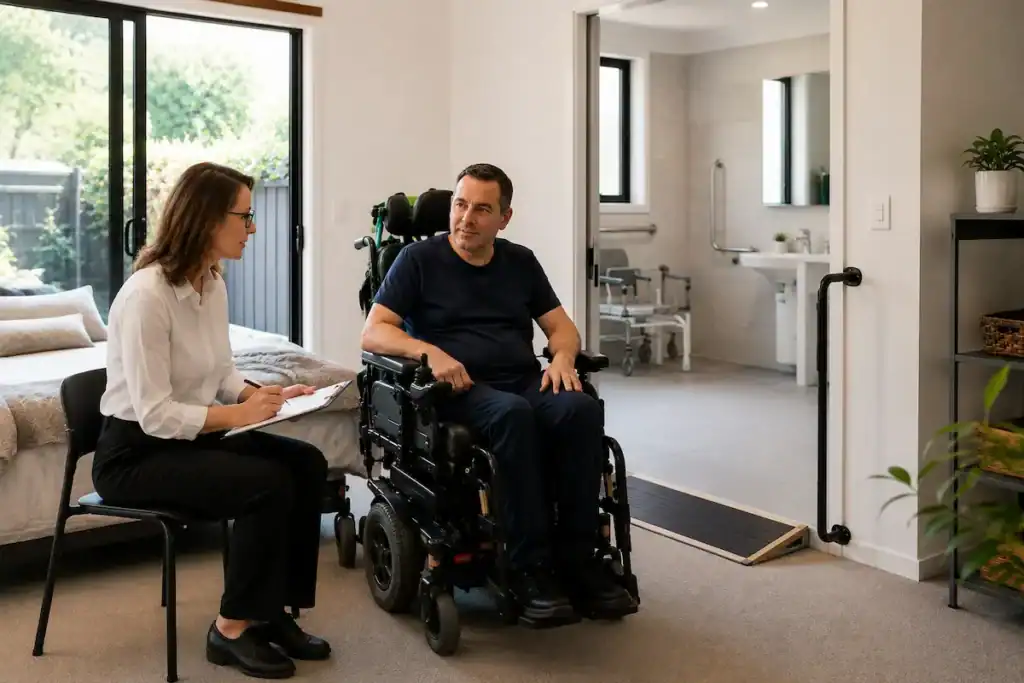
  • Two senior occupational therapists attend every catastrophic injury IME, included at no additional cost to the referrer.
  • Two sets of observations and a shared analysis of function, particularly important in cases involving cognitive, communication or behavioural changes.
  • Reports are authored by one occupational therapist, with the second therapist providing peer review.
2

In-Home Assessment

  • Assessments are preferred in the claimant's home, where transfers happen in reality rather than in a clinic.
  • The bathroom that was never modified and the bedroom that has become the centre of daily life are visible only in context.
  • Telehealth and hybrid formats available for geographically remote matters.
3

Senior Review & Track Record

  • Every report is reviewed by a senior clinician before it leaves our office.
  • 40+ years of practice and thousands of medico-legal reports delivered.
  • Evidence given in catastrophic matters in Australian courts and tribunals across multiple jurisdictions.

"Catastrophic injury assessments can be emotionally confronting. Our trauma-informed practice plans the day around the claimant — support persons welcome, breaks when needed, the dignity and wellbeing of the injured person leading the way."

Why Choose Independent OT Medico Legal

Catastrophic injury matters demand occupational therapy evidence that is clinically deep, jurisdictionally literate, and defensible under cross-examination.

Two Senior OTs at Every Assessment

Two senior occupational therapists attend every catastrophic injury IME, included at no additional cost to the referrer. Two sets of observations and a shared analysis of function, particularly important in cases involving cognitive, communication or behavioural changes. Reports are authorised by one occupational therapist, with the second therapist providing peer review.

Senior Clinicians Only

The OTs we allocate to catastrophic matters bring at least a decade of clinical experience across acute, rehabilitation and community settings, with specific exposure to brain injury, spinal cord injury and multi-trauma.

Multi-Scheme Literacy

Reports written to sit across state lifetime-care schemes, the NDIS and Comcare without being rewritten for each forum, reducing duplication and keeping a single evidentiary record.

Genuinely Dual-Side Practice

Instructions accepted from both plaintiff and defendant law firms, with the same methodology applied to every assessment. Independence is a lived part of our operating model, not a line on a page.

Trauma-Informed Throughout

Assessments planned in collaboration with the injured person and their support person, paced to their tolerance, and conducted with the dignity these matters require.

Principal-Led, Four Decades of Practice

Our principal, Rebecca Thompson, has more than three decades of experience and provides close clinical supervision to the team. Available for conclaves, joint reports and cross-examination, drawing on 40+ years of medico-legal practice across Australia since 1984.

What Our Clients Say

Frequently Asked Questions

There is no single legal definition. Each Australian state and territory lifetime-care scheme has its own eligibility criteria, and the NDIS and Comcare add further frameworks. Clinically, the term is generally applied to severe and permanent injuries: severe traumatic or hypoxic brain injury, high-level spinal cord injury, multi-limb amputation, severe burns, permanent blindness, and profound birth injuries. Our reports describe the functional consequences in detail and address the relevant scheme thresholds on the face of the report.

The state lifetime-care schemes (icare LTCS, TAC, NIISQ, SA LSS, WA CTP catastrophic injuries support, NT MACA and TAS MAIB) generally provide treatment, rehabilitation and attendant care for people catastrophically injured in a motor vehicle accident in the relevant state. The NDIS can provide support that falls outside the scope of a lifetime-care scheme, and some clients are covered by both. Our reports are written so they can be used across the relevant schemes rather than being tied to just one. Specific eligibility and entitlement questions are matters for the instructing solicitor and the scheme itself.

Yes, and we write with that in mind. The underlying functional question (what is this person able to do, what support do they need, what equipment and home modifications are required, and how will those needs change across life) is the same regardless of which scheme ultimately funds the support. We address the relevant scheme frameworks in the report so that the same document can support a common law claim, an LTCS or TAC participation decision, and an NDIS plan review.

Yes. Our occupational therapists have given expert evidence in catastrophic injury matters in Australian courts and tribunals. Reports are written to be court and tribunal ready, and our authors are available for conclaves, joint reports and cross-examination.

We first define the injured person’s support needs in clinical terms (the tasks that require assistance, the level of skill required, and whether the assistance is scheduled, on-call, sleepover or active overnight). We then map those needs to care hours across phases of life. Where care needs are expected to change, we set out the steps and the reasoning. We provide the clinical hour recommendations and hourly rates for each service to provide an overall care costing.

Medico-Legal Services: Professionals at an outdoor table exchange documents, with a laptop nearby, suggesting a consultation or legal review.

Contact Us for Catastrophic Injury Medico Legal Reports

Most matters benefit from a short conversation before formal instruction so we can confirm scope, timing and jurisdiction. Reach us by:

Email: hello@iotml.com.au (the easiest way for most law firms to send a brief)

Phone: 0427 435 591, Monday to Friday 9 am to 5 pm AWST

For state-specific information on how we work across Australian jurisdictions, see our NSW coverage page and the equivalent pages for each other state and territory.