










Turbulence Injury Medico Legal Reports

turbulence injury medico legal reports

When a passenger or crew member is injured by sudden, unexpected motion (in flight, at sea, on a train or on an amusement ride) the OT report is used to define what activities they could manage before the subject incident, what they can do now, and what care, equipment and rehabilitation they will need in the future as a result of their injuries.

Independent OT Medico Legal has prepared functional impact reports for Australian law firms, insurers and schemes since 1984. Two senior occupational therapists attend every assessment at no extra cost, enabling our robust peer review system. Our principal, Rebecca Thompson, was awarded the 2025 Legal Masters Expert Witness Award.

40+ Years Experience
5000+ Reports Delivered
7 Expert OTs
National Coverage

What Counts as a Turbulence Injury?

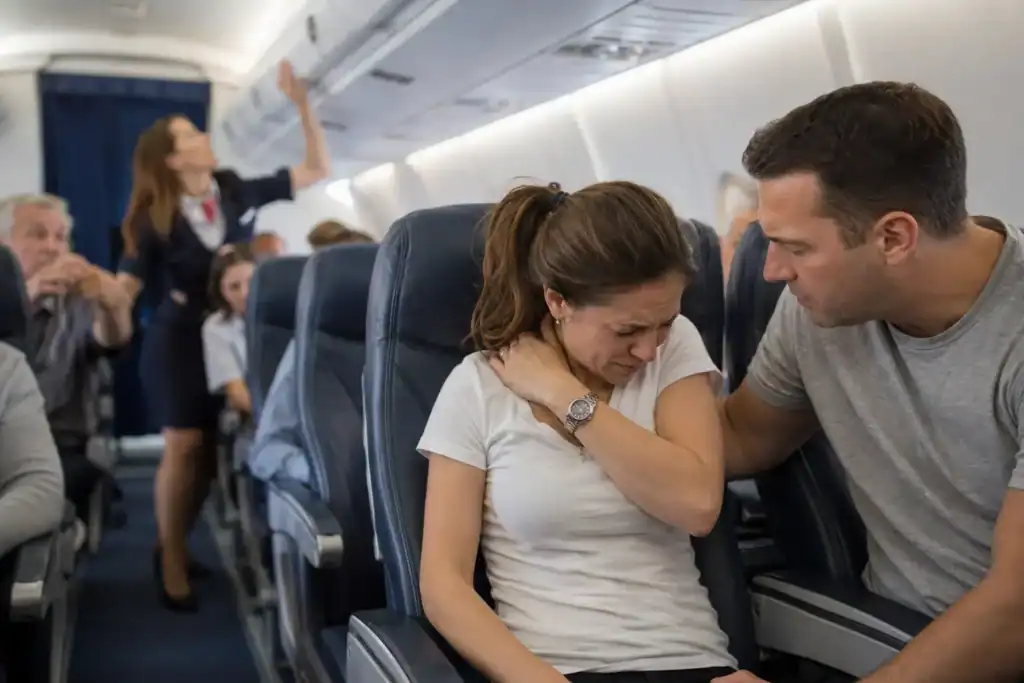
“Turbulence injury” is a useful umbrella term for a broader class of motion-caused injury. These injuries result from a sudden, unexpected force acting on a body that is restrained or unable to brace, often with a vertical or rotational component.

Clear-air and severe-weather turbulence, aborted take-offs and landings, wake turbulence, and unsecured-cabin events affecting belted and unbelted passengers and crew on duty or in rest.

Rough seas, sudden rolls, heavy weather, collisions and groundings on ferries, cruise ships, and charter and commercial vessels. Injuries often occur on stairs, in bathrooms or galleys, or at the moment of an unexpected heel.

Emergency braking, derailment, unexpected jolts, and injuries to standing passengers on suburban and intercity services.

Theme park and show rides, inflatable attractions and fairground equipment, including injuries caused by malfunction, sudden deceleration or unexpected motion profiles.

Bus braking and swerving, falls on light rail and trams, and injuries on coach services.

What unites these matters is the mechanism of injury: the body is moved by a force it cannot anticipate or brace against. The impact of the resulting injuries is assessed using the same functional assessment methodology we apply across our broader medico-legal practice.

Typical Injuries

The injuries described in motion-caused matters overlap substantially with those we assess in road trauma, workplace incidents and public liability claims. They can be varied, and depending on the severity may include:

  • Fractures of the limbs, ribs and, in severe events, skull and facial bones
  • Back injuries: cervical and lumbar spine, whiplash-associated disorder and disc-related pain
  • Brain injury: head trauma, concussion and mild traumatic brain injury, sometimes with delayed presentation
  • Spinal cord injury, in the most severe events
  • Shoulder and rotator cuff injuries, often from a reflex grab at a fixture
  • Soft tissue and ligamentous injuries to the knees, ankles and wrists
  • Psychological injury, common after sudden-force events; including PTSD, anxiety, fear of travel, agoraphobia and avoidance of specific modes of transport
  • Exacerbation of pre-existing spinal, orthopaedic or psychological conditions

Depending on the severity of injury, the functional impact may mean the claimant has difficulty driving, attending to domestic tasks, attending to self-care, or completing work tasks. An OT assessment defines the functional impact and costs the associated care, domestic services and equipment required as a result.

Who We Work With

Instructions accepted from plaintiff and defendant law firms in every state and territory. We apply the same methodology regardless of the instructing party.

Aviation Passenger Liability

Domestic and international carrier matters where passengers have been injured in flight.

Maritime Liability

Cruise, ferry and charter vessel matters where motion or sudden force has caused injury.

Public Liability

Claims against venues, operators and charter providers arising from motion-caused events.

Workers Compensation

Claims by cabin, ferry, cruise, rail and bus crew injured in the course of their employment.

Travel Insurer Subrogation

Subrogated recovery work on behalf of domestic and international travel insurers.

In-person assessments are available to claimants in all seven states and territories, with telehealth and hybrid formats available for claimants based overseas or in remote locations.

What Our Reports Cover

An evidentiary document built to hold up to scrutiny from insurers, foreign carriers, tribunals and, where a matter proceeds, the court.

Functional Capacity, Before and After

Concrete description of pre- and post-incident function, drawn from medical records and direct assessment observations.

Daily Life and Participation

Activities of daily living, domestic and community participation, sleep, driving, and care of dependants.

Past and Future Care

Gratuitous care quantified from injury to assessment. Future care, equipment and home modification needs set out where clinically indicated.

Return-to-Work Capacity

For roles involving travel or motion, both physical demands and the psychological tolerance required to return to a workplace resembling the scene of injury.

Leisure Travel Ability

Described as an observable functional limitation rather than a psychiatric diagnosis, and distinguished from any pre-existing travel anxiety.

Pre-existing Conditions, Separated

Functional impact of the motion event separated from any pre-existing impairment. Where the evidence is mixed, we say so.

Our Medico Legal Professionals

What to Expect

A transparent, step-by-step guide to our independent assessment process.

1

Prior to Assessment

  • Review of all hospital discharge summaries and medical records.
  • Analysis of specialist reports (treating doctors, psychiatrists, rehab consultants).
  • Creation of a detailed timeline of events from injury to present.
2

During Assessment

  • 2-3 hour session including interview, paper-based assessments, and clinical observations.
  • Support persons are welcome to attend to provide comfort and insights.
  • Evaluation of past gratuitous care and rehabilitation impact.
3

Following Assessment

  • Comprehensive analysis and evaluation of all gathered information.
  • Clarification of details if required in the weeks following.
  • Report release typically within 1-4 weeks of assessment date.

"Our primary objective is to provide a comprehensive report while minimising stress on the person being assessed."

Why Choose Independent OT for Turbulence Injuries?

Occupational therapy evidence that is clinically rigorous, trauma-aware, and written for forums that may include foreign carriers, international conventions and specialised tribunals.

Two Senior OTs at Every Assessment

Two senior occupational therapists attend every turbulence injury IME, included at no additional cost to the referrer. Two sets of observations and a shared analysis of function, particularly important in cases involving cognitive, communication or behavioural changes. Reports are authorised by one occupational therapist, with the second therapist providing peer review.

Functional Impact Expertise

The skills our team brings to polytrauma, spinal, psychological and work-capacity matters translate directly to motion-caused injury. We define the functional impact of any physical, cognitive or psychological injury.

Trauma-Informed Throughout

Travel phobia, PTSD and avoidance patterns are common after sudden-force events. Our assessment format is designed to be tolerated by claimants with varying levels of psychological injury.

Genuinely Dual-Side Practice

We accept instructions from both plaintiff and defendant law firms and apply the same methodology regardless of which side has briefed us.

Principal-Led Expert Witness Capability

Our principal, Rebecca Thompson, was awarded the 2025 Legal Masters Expert Witness Award. We are available for conclaves, joint reports and cross-examination.

Four Decades of Medico-Legal Practice

Independent OT Medico Legal has prepared functional impact reports across Australia since 1984.

What Our Clients Say

Frequently Asked Questions

We use “turbulence injury” as an umbrella term for injuries caused by sudden, unexpected motion in aviation, maritime, rail, amusement ride and public transport settings. The clinical pattern is a sudden force on a restrained or confined body, often with a vertical or rotational component; producing injuries to the spine, head, shoulders and soft tissues, and frequently a psychological component.

Yes, this is within the scope of occupational therapy practice. We do not make psychiatric diagnoses (that is the role of a psychiatrist or psychologist) but we are well placed to describe the functional impact of psychological sequelae on travel tolerance, return to work in travel-related roles, engagement with family interstate or overseas, and participation in pre-injury activities.

Yes. We conduct assessments across all seven states and territories, and offer telehealth and hybrid formats for claimants based overseas or in remote locations. This is often relevant in motion-caused claims, where cabin crew, cruise staff and international visitors may not be able to attend a capital-city assessment.

Medico-legal OT assessments are routinely conducted well after the date of injury, sometimes years later, because the question is functional impact and future need, not acute management. We draw carefully on medical records, imaging, treating-clinician notes and the injured person’s own account to describe the functional arc from injury to the present. A later assessment can give a clearer view of what has stabilised, what has resolved and what is likely to persist.

Medico-Legal Services: Professionals at an outdoor table exchange documents, with a laptop nearby, suggesting a consultation or legal review.

Contact Us for Turbulence Injury Medico Legal Reports

Most matters benefit from a short conversation before formal instruction so we can confirm the right assessment format, scope and timing. Reach us by:

Email: hello@iotml.com.au (the easiest way for most law firms to send a brief)

Phone: 0427 435 591, Monday to Friday 9 am to 5 pm AWST